Do I really need to remove that stump? Can't I just leave it?
You can, but I wouldn't recommend it. A stump isn't just an eyesore; it's a hazard and a potential problem magnet. For starters, it's a tripping hazard, especially if it's in a high-traffic area of your yard. Mowing around it is a pain, and you're always risking damage to your lawnmower blades. Beyond that, stumps attract pests like termites, ants, and beetles. These critters don't just stay in the stump; they can spread to your house or other healthy trees. Plus, a decaying stump can host various fungi and diseases that might spread to your other plants. And let's not forget about new growth. Many stumps, especially from hardwoods common around here like oaks and maples, will try to sprout new shoots, turning your problem into a constant battle against suckers. So, while you *can* leave it, you'll likely regret it later.
What's the difference between stump grinding and stump removal?
This is a common question, and it's important to understand the distinction. Stump grinding is exactly what it sounds like: we use a specialized machine with a rapidly rotating cutting disk that grinds the stump down into wood chips. We typically go about 6 to 12 inches below the ground level, sometimes more depending on your plans for the area. This gets rid of the visible part of the stump and enough of the root crown so you can plant grass, shrubs, or even a new tree over it. The main roots, however, are usually left to decay naturally underground. Stump removal, on the other hand, involves excavating the entire stump and as much of the major root system as possible. This usually requires heavier equipment and leaves a much larger hole. It's a more invasive and often more expensive process, but it's sometimes necessary if you're planning to build on the spot or lay a foundation. For most homeowners just wanting to reclaim their yard space, grinding is usually the way to go.
How much does stump grinding usually cost in Huntsville, AL?
Ah, the million-dollar question! It's tough to give an exact number without seeing the stump, but I can tell you what influences the price. The biggest factors are the size of the stump (diameter at its widest point, usually at ground level), the type of tree (some woods are much harder to grind than others), and the accessibility of the stump. If we have to haul our grinder through a narrow gate or over a steep hill, that adds to the labor. Stumps with rocks or debris embedded in them can also slow things down and wear out our equipment. Generally, you're looking at anywhere from $150 for a small, easy-to-access stump up to $500 or more for a very large, difficult one. Most average stumps fall somewhere in the middle. We always give a free, no-obligation estimate, so you'll know exactly what to expect from Midway Tree before we start any work.
What happens to the wood chips after grinding?
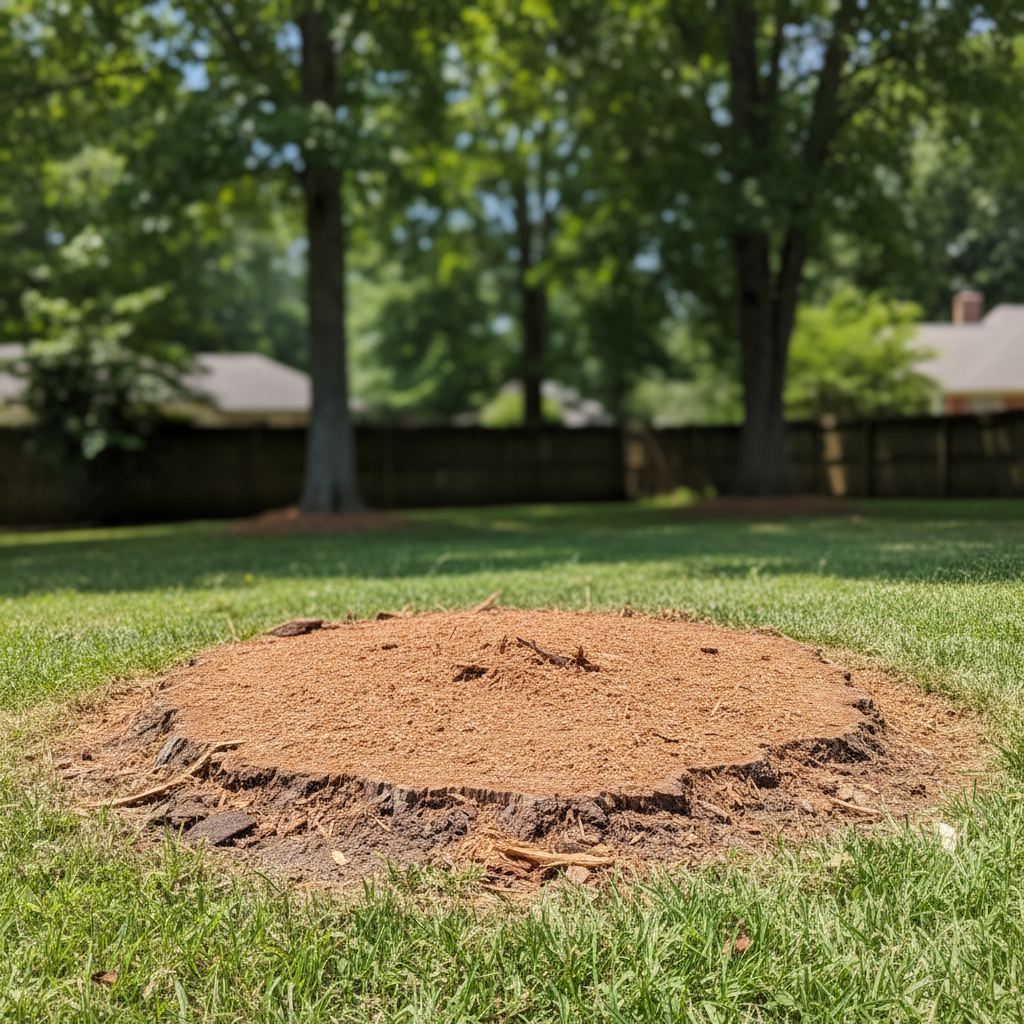
After we've ground down the stump, you'll be left with a pile of wood chips mixed with some soil. You've got a few options here. Many of our clients choose to keep the chips. They make excellent mulch for garden beds, helping to retain moisture and suppress weeds. Just be aware that fresh wood chips can sometimes tie up nitrogen in the soil as they decompose, so if you're using them around sensitive plants, you might want to add a nitrogen supplement. If you don't want the chips, we can haul them away for an additional fee. Some folks also like to use them to fill the hole left by the grinding, which is perfectly fine. The chips will settle over time, so you might need to add more soil later if you're planning to plant grass.
How long does the grinding process take?
For an average-sized stump, say 18-24 inches in diameter, the actual grinding process usually only takes about 30 minutes to an hour. Larger, tougher stumps, or multiple stumps, will obviously take longer. What often takes more time is setting up the equipment, clearing the area around the stump to ensure safety, and then cleaning up afterward. We take safety very seriously; those grinders throw debris at high speeds, so we make sure to protect nearby structures, windows, and plants. All in all, for a single, average stump, you can expect us to be on site for about an hour to two hours from start to finish.
Can I plant a new tree or grass where the stump was?
Absolutely! That's one of the main benefits of stump grinding. Once the stump is ground down and the chips are removed or spread out, you'll have a nice, clear area. If you want to plant grass, you'll need to fill the hole with good quality topsoil, level it out, and then seed or lay sod. The wood chips left behind from grinding will decompose over time, enriching the soil. If you're looking to plant a new tree, you'll want to make sure you've removed as many of the old chips as possible from the immediate planting area and replaced them with fresh soil. This ensures the new tree gets a good start without competing with decomposing wood or facing any nitrogen depletion. We've seen plenty of beautiful new trees thriving where old stumps once were, even in the dense clay soil we often find in areas like Hampton Cove.
What about the roots left underground? Do they need to be removed too?
For most situations, no, the roots left underground after grinding don't need to be removed. They'll naturally decompose over time. This process can take several years, depending on the size of the roots and the type of wood, but it's generally not problematic. As they decompose, they actually add organic matter back into the soil. The only times you might need to worry about them are if they're very large roots that could interfere with future construction plans, or if they're from a tree known to have aggressive root systems that might cause issues with plumbing or foundations down the line. But for typical residential landscaping, leaving the roots to decay is perfectly safe and the most common practice. It saves you a lot of extra digging and expense.
Is stump grinding a DIY job, or should I hire a professional?
Look, I'm a professional, so of course I'm going to lean towards hiring us! But honestly, this isn't a job for the faint of heart or the inexperienced. Stump grinders are powerful, dangerous pieces of equipment. They have massive rotating blades that can cause serious injury if not operated correctly. There's also the risk of hitting rocks, pipes, or other hidden objects underground, which can damage the machine or send debris flying. Plus, these machines are heavy and can be difficult to transport and maneuver, especially on uneven terrain or around your landscaping. Renting one might seem cheaper upfront, but you're responsible for any damage to the machine, and you're putting yourself at risk. For the safety of yourself and your property, and to ensure the job is done right the first time, it's almost always better to call in a professional like Midway Tree. We have the right equipment, the experience, and the insurance to handle it safely and efficiently.
```