Alright, let's talk stumps. You've had a tree taken down, or maybe you just bought a place with some old stumps hanging around. Now you're staring at that thing in your yard, probably wondering, "What's the deal with getting rid of this?"
It's not just an eyesore, you know? Stumps can be real tripping hazards, especially if you've got kids or pets tearing around. They can mess up your mower, block new landscaping plans, and honestly, they just make your yard look unfinished. Plus, here in our humid Huntsville climate, decaying wood is practically an open invitation for termites, ants, and other creepy crawlies you absolutely don't want heading for your house.
So, you're thinking about grinding it down or getting it completely removed. Smart move. Here are the most common questions I get from folks right here in Huntsville about tackling those stubborn stumps.
What's the real difference between stump grinding and stump removal?
This is probably the biggest question, and it's a pretty important one. Most of the time, when people say "stump removal," what they actually mean is "stump grinding."
- Stump Grinding: This is where we use a special machine, a stump grinder, to basically chew up the stump into wood chips. We grind it down below ground level, typically about 6 to 12 inches deep. This gets rid of the visible part of the stump and most of the main root crown. Any roots that spread out further underground? They're just left to decay naturally. It's quicker, less invasive, and usually more affordable. For most homeowners, this is the best bet. It clears the space, gets rid of hazards, stops the stump from regrowing, and makes the area ready for grass, new plants, or even a little patio.
- Stump Removal: Now, this is a much bigger job. It means digging out the entire stump and its main root ball. We're talking heavy equipment, a much bigger hole, and a lot more disruption to your yard. This is usually only needed if you're planning some serious construction, like pouring a new foundation or a big concrete slab right where the stump was, or if you want to plant another tree in that exact same spot. It's more disruptive, takes more labor, and costs more.
How much does stump grinding cost in Huntsville, AL?
Alright, let's talk money. The cost can really jump around depending on a few things: the stump's size (its diameter), the type of wood, how easy it is to get to, and whether you want us to haul away the grindings.
In Huntsville, you're generally looking at a range. Many residential stumps fall between $100 and $350. Some companies might charge by the inch of diameter—say, $2 to $3 per inch—often with a minimum fee. A small stump might be around $100, while a larger one (over 40 inches) or one that's tricky to reach could be $350 or more. If you've got multiple stumps, you might even snag a discounted rate per stump.
It's always best to get a free estimate, though. That way, we can check out your specific situation and give you a precise price. Midway Tree always gives a clear quote upfront, no surprises.
How long does the stump grinding process actually take?
For a single, average-sized stump, it's usually pretty quick. We're talking anywhere from 15 to 45 minutes, sometimes up to an hour. What makes it take longer, you ask?
- Stump Size: Bigger stumps, naturally, take more time.
- Wood Type: Hardwoods like oak or hickory are denser and take longer to grind than softer woods like pine.
- Root System: Some trees, like maples, have extensive surface roots that need grinding too, and that adds time.
- Accessibility: If the stump is in a tight spot, behind a fence, or on a slope, it needs more careful maneuvering, which can stretch out the job.
For a crew, a full day's work might be 6 to 10 stumps. So, don't worry, we won't be camping out in your yard all week for just one stump.
Do I need a permit to get a stump ground or removed in Huntsville?
Generally, for just grinding a stump on your private property, you typically don't need a specific permit from the City of Huntsville. The permits are usually for tree removal itself, especially for larger trees, those near public property or utility lines, or protected species.
However, it's always smart to double-check with the city's planning department if you're unsure, especially if the tree was really big or if there are any unique circumstances. Better safe than sorry, right? Most of the time, for a stump that's already there, you're in the clear.
What happens to the wood chips and debris after grinding?
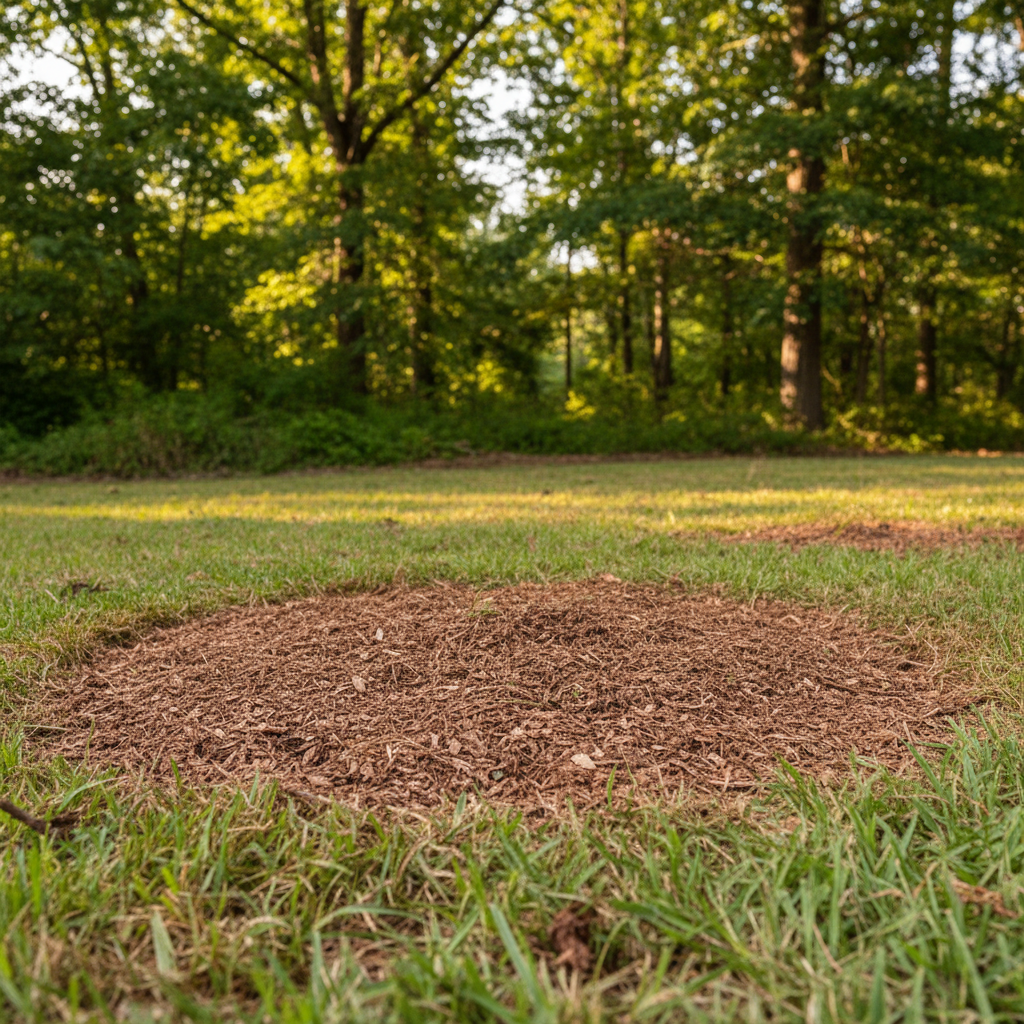
After we grind a stump, you'll be left with a pile of wood chips mixed with some soil. You've got a couple of options here:
- Leave them: Lots of folks choose to leave the grindings to fill the hole where the stump used to be. These chips are organic material, and they can actually be good for your soil—especially in Huntsville's clay-heavy ground—helping with drainage and adding nutrients as they break down. You can spread them around the yard or use them as mulch in flower beds.
- Haul them off: If you really don't want the chips, we can definitely haul them away for you. There's usually an extra charge for this, as it adds to our labor and disposal costs. We'll make sure the area is clean and ready for whatever you've got planned next.
Can I plant a new tree or grass right over where the stump was?
Yep, you sure can! That's one of the big perks of stump grinding. Once the stump is ground down and the area is cleaned up or filled with the grindings, you've got usable space again.
If you're planting grass, you can usually lay sod or seed pretty quickly, especially if we haul away the grindings and bring in some fresh topsoil. If you leave the grindings, it's a good idea to let them settle and decompose for a few weeks (4-8 weeks is a good rule of thumb) before planting directly into them. You might also want to mix in some fresh soil to give new plants a better start.
If you want to plant a new tree in the exact same spot, that's where full stump removal might be a better idea, just to make sure there are no remaining root fragments that could mess with the new tree's growth. But for most landscaping, grinding works just fine.
Will the stump grow back after grinding?
No, not really. Stump grinding removes the living part of the stump and cuts off its ability to regrow. You might see some small sprouts from any remaining root systems for a season or two, but the tree itself won't come back from the ground-down stump. Those remaining roots will just decay naturally over time. If you're seeing persistent sprouts, it's usually from a root that wasn't connected to the main stump, or maybe even from a different tree altogether.
Getting rid of those old stumps just makes your yard safer, cleaner, and opens up a whole lot of possibilities for what you want to do with your outdoor space. If you've got a stump giving you grief, give us a call at Midway Tree. We'll get it handled for you.