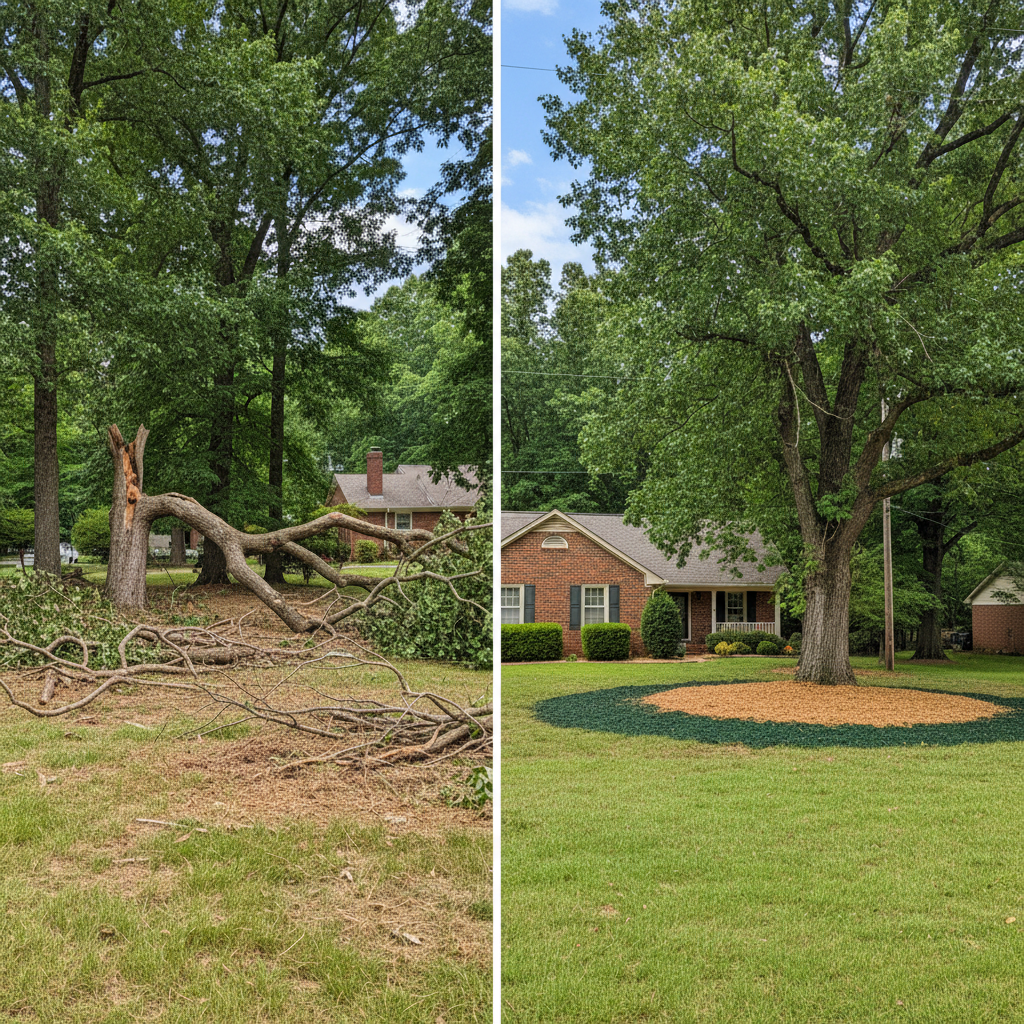
You've got trees, and yeah, sometimes they need a trim. Maybe they're getting a little too chummy with the house, or they're blocking that nice view you love, or perhaps they just look like they've given up on manners. When you finally decide it's time to get those branches cut back, you'll probably hear about two main ways people do it: topping and proper pruning. Now, I've been doing this a long time here in Huntsville, and believe me, these aren't just two names for the same thing. They're totally different approaches, and picking the wrong one can end up costing you way more than just the trimming fee.
What's Tree Topping, Anyway?
Let's talk about topping first, because it's the mistake I see most often. Topping basically means chopping off a tree's main branches or the very top of its crown. Often, it leaves behind just stubs or side branches that are way too small to handle new growth. People usually go for this because they want to shrink the tree's height fast, or they might think it makes the tree safer. You hear things like, "My oak's getting huge, let's just lop the top off."
On the surface, it seems like a quick fix, right? You get that instant height reduction. It might even seem cheaper at first since it doesn't need as much skill. But that's where the good stuff ends, and the real headaches start.
The Bad News About Topping
- Weak & Dangerous Growth: When you top a tree, it freaks out and shoots out a bunch of weak, super-fast-growing shoots from those stubbed branches. These are often called 'water sprouts' or 'epicormic growth.' They're barely attached and way more likely to snap during a strong storm, like the ones we get here in North Alabama. Just think about those summer thunderstorms rolling through Hampton Cove or Madison – topped trees are practically asking for trouble.
- Starvation & Stress: A tree's leaves are its food factories, plain and simple. When you hack off a huge chunk of its canopy, you're essentially starving the poor thing. This puts it under immense stress, making it an easy target for insects, diseases, and sun scald. It's kind of like trying to run a marathon after skipping meals for a week, you know?
- Ugly Appearance: Let's be honest, topped trees look awful. They lose their natural shape and often end up looking like a hat rack with a bunch of unruly sprouts sticking out. You hired someone to make your tree look better, not worse.
- Shorter Lifespan & Higher Costs: The stress and decay that come from topping can seriously shorten a tree's life. And those weak sprouts? They'll need constant, expensive trimming to keep them in check, or they'll just break off and cause damage. So, that cheap upfront cost quickly turns into ongoing maintenance nightmares and, quite possibly, a full tree removal down the line.
What is Proper Tree Pruning?
Now, proper pruning is a completely different ballgame. This is where a certified arborist or a genuinely skilled tree care professional carefully removes specific branches for the tree's health, its structure, and how it looks. We're talking about making cuts in exactly the right spots – usually just outside the branch collar – to help it heal properly and grow strong.
When we prune correctly, our goals include:
- Removing Dead or Diseased Branches: This is super important for the tree's health and stops decay from spreading.
- Thinning the Crown: We take out some interior branches to improve air circulation and let more light through. This helps cut down on disease and encourages stronger growth, which is especially key for our dense shade trees in this humid climate.
- Raising the Crown: This means taking off lower branches to make space for people, vehicles, or structures.
- Reducing the Crown: We do reduce the tree's overall size, yes, but we do it by cutting back to a side branch that's at least one-third the diameter of the branch we're removing. This way, the tree keeps its natural shape and structure.
- Improving Structure: We remove crossing branches or those that are weakly attached to prevent future problems.
The Benefits of Proper Pruning
- Healthier Trees: Proper cuts heal quickly, and the tree isn't put under unnecessary stress. It can focus its energy on strong, healthy growth.
- Stronger Structure: By taking out weak or competing branches, you help the tree build a robust framework that can stand up better to wind and ice damage.
- Enhanced Appearance: A tree that's been properly pruned keeps its natural beauty and really boosts your property's curb appeal.
- Long-Term Savings: While the initial cost might be a little more than a quick topping job, proper pruning means you won't need constant corrective cuts. It also extends the tree's life, saving you money in the long run. You'll avoid expensive removals and property damage from falling limbs, which is a big deal.
My Recommendation for Huntsville Homeowners
It's pretty obvious where I stand on this. For your trees here in Huntsville, especially with our clay soils and sometimes wild weather, proper pruning is the only way to go. Please, don't fall for the quick, cheap fix of topping. It's a short-term solution that only creates long-term problems and, ultimately, can kill your tree.
When you're looking for someone to work on your trees, make sure to ask them about their methods. If they start talking about topping or just 'cutting it back' without mentioning specific pruning techniques, that should be a big red flag. At Midway Tree, we always recommend and practice proper pruning techniques that put the health and longevity of your trees first. It's an investment in your property and the natural beauty of our Rocket City.